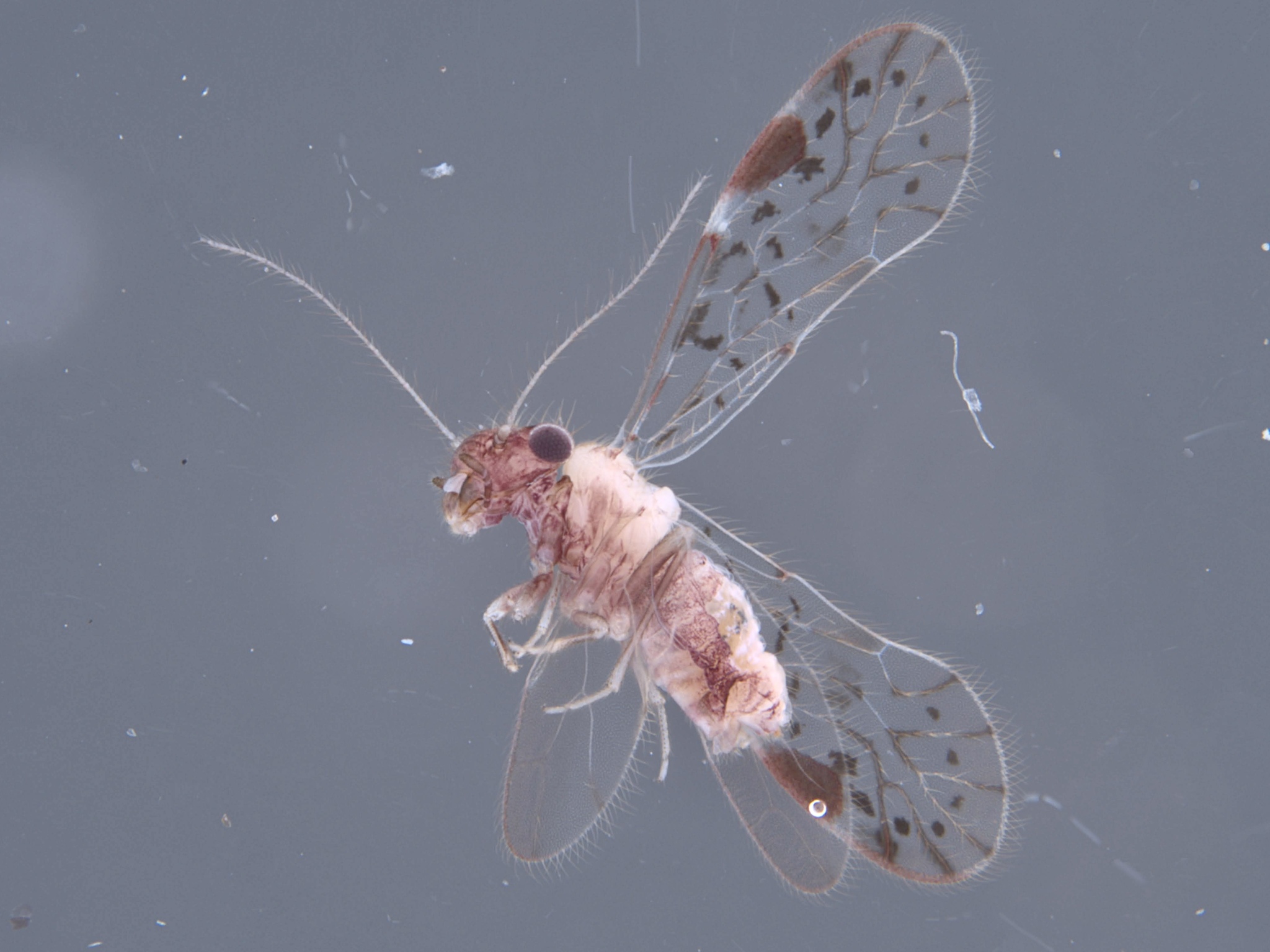
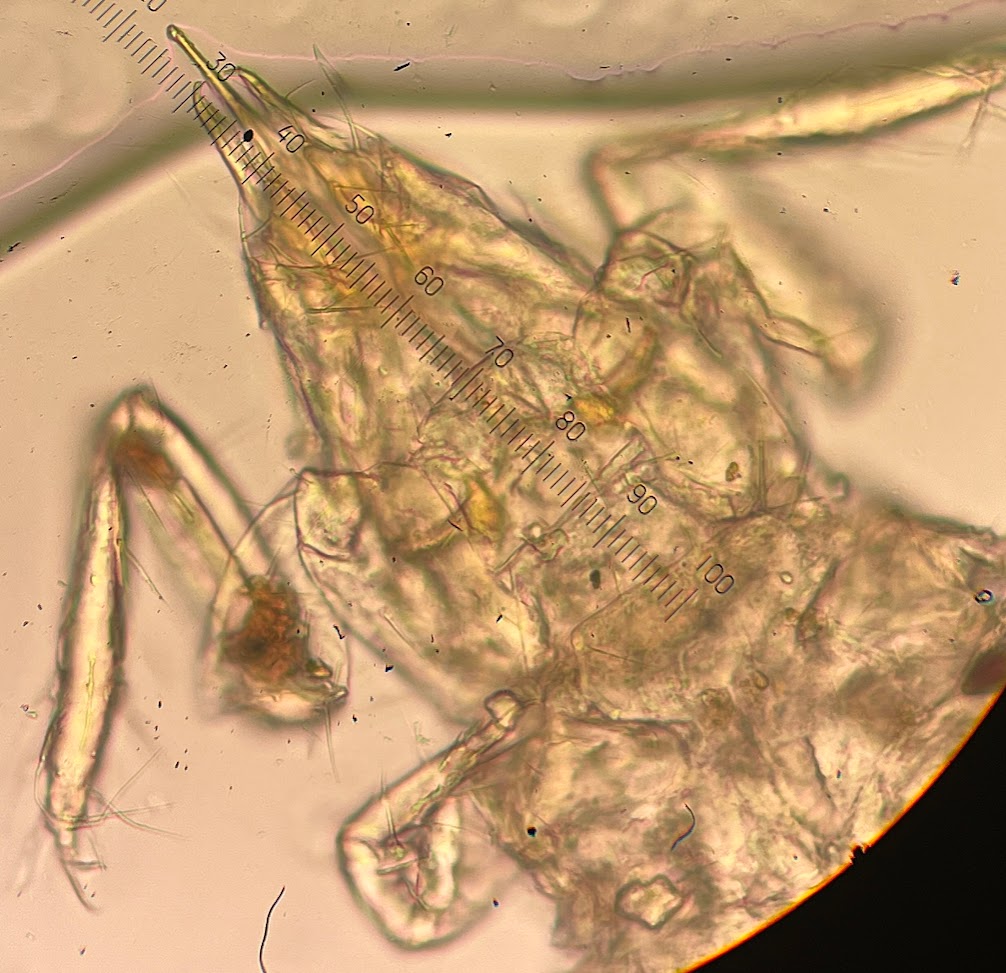
Identification
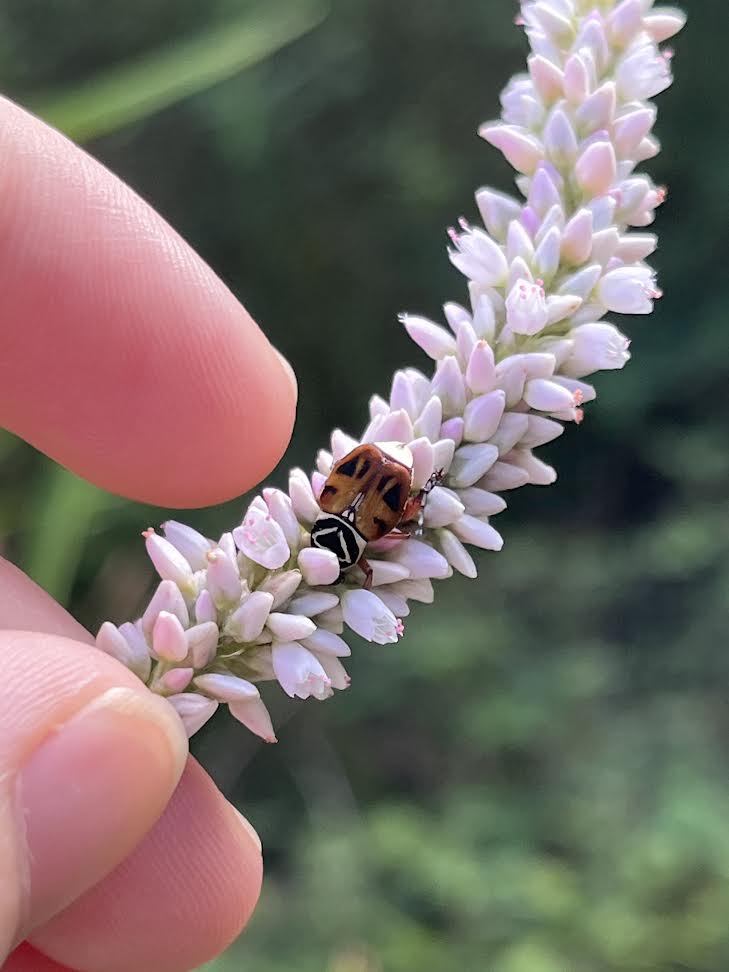
Gorgeous find! This is a type of beetle called a Delta Flower Scarab, their scientific name is Trigonopeltastes delta. This species was first described way back in 1771 by Johann Reinhold Forster. The name of it’s genus (Trigonopeltastes) means triangle shield, and specifically refers to the pelta - a shield used by certain Greek infantry called peltasts. The species name (delta) refers to that triangular shape on the beetle’s thorax, which resembles the greek letter delta.
Distribution
Delta Flower Scarabs are found across the Southeastern U.S., going as west as Texas and about as north as Maryland. There is one other U.S. species in the genus Trigonopeltastes named Trigonopeltastes floridanus, the Scrub Palmetto Scarab. It’s only found in the unique western-like habitat called the Florida scrubland.
Host Plants
Adult Delta Flower Scarabs eat nectar and pollen from flowers of a wide variety of plant species. Some of these include cabbage palmetto, coneflower, feverfew, goldenrod, new jersey tea, queen anne's lace, rattlesnake master, arborvitae, avocado, bay, boxthorn, brazilian pepper, buckwheat, button-wood, carnations, carrot, chinkapin oak, citrus, crotalaria, croton bud, elephant foot, faba bean, florida silver palm, groundsel, hibiscus, inkberry, jujube, kapok, leatherwood, lychee, magnolia, mango, marlberry, morning glory, orchid, paper bark tea tree, poinsettia, poisonwood, privets, red-root, rose, saw palmetto, shining sumac, southern sumac, white sapota, whorled milkweed and almost certainly many more. A number of the plants that they feed on they also pollinate!
Life History
Adult beetles are usually found flying around during the day May-August (though they seem to emerge again in the fall in Florida). Males are less colorful than females and are more prevalent. Mating occurs on flowers, and eggs are usually laid in decaying wood which the young larvae will feed on. However, in some very intriguing cases the larvae have been found feeding inside Giant Airplant (Tillandisa utriculata). Larvae then pupate and emerge as adults again around May.
Anecdotes/Hypotheses
Interestingly in the Florida everglades these beetles can be found in the thousands on palmetto flowers. This is particularly interesting to me because of their association with the Giant Airplant. Giant Airplants historically form a vast and unique microhabitat in the canopy of the trees since they form phyotelma. A phytotelma (phytotelmata plural) is a fancy term for when a plant holds a pool of water inside of it, which is then inhabited by all sorts of tiny organisms. Unfortunately the populations of Giant Airplant are in steep decline due to an introduced species of weevil, and are now endangered. So with the Delta Flower Scarab I’m curious how it might play a role in that habitat, how it’s populations have been affected by the drop in Giant Airplants, and also what allowed them to adapt to such an unusual plant in the first place. Very strange!
Another aspect of this beetle I’m wondering about is if the combination of their very diverse palate, and its inclusion of Marlberry (a native Ardisia species), could point to Delta Flower Scarabs having to capability to adapt to the invasive Coral Ardisia. It feeds on a number of introduced species and unrelated plant groups after all, even some plants with pretty intense defenses!
Thank you so much for sharing, if you have any questions don't hesitate to reach out!
Bonus bug fact: The vibrant colors on this beetle may help it trick other animals into thinking it’s a paper wasp! This is called Batesian mimicry, when an organism look like something that's more dangerous than it actually is.
Sources
Dozier HL. 1920. "An ecological study of hammock and piney woods insects in Florida." Annals of the Entomological Society of America 13: 325–380.
Frank, J. H., & Cave, R. D. (2005, September). Metamasius callizona is destroying Florida’s native bromeliads. In Second International Symposium on Biological Control of Arthropods, Davos, Switzerland (Vol. 1, pp. 91-101).
Goodyer GJ, Nicholas A. 2007. Scarab grubs in northern tableland pastures. NSW Department of Primary Industries. Primefact 512: 1–8.
Lounibos, & Frank. (2009). Insects and allies associated with bromeliads: a review. Terrestrial arthropod reviews, 1(2), 125-153.
Ritcher PO. 1958. "Biology of Scarabaeidae." Annual Review of Entomology 3: 331–334.
Pascarella, J. B., Waddington, K. D., & Neal, P. R. (2001). Non-apoid flower-visiting fauna of Everglades National Park, Florida. Biodiversity & Conservation, 10(4), 551-566.
Woodruff RE. 1960. "Suppression of the genus Roplisa Casey with notes on the United States species of Trigonopeltastes Burmeister (Coleoptera: Scarabaeidae)." Florida Entomologist 43: 139–145.